Showing posts with label Advertising. Show all posts

Friday, May 22, 2026

It's all KFC


I would like to return to last week’s Fryday and, by way of explanation, answer a question one or two of you have asked. It is a question that I have been asked before, almost every time I either bored or enthralled people with stories of my political exploits.
That question is: how come you were working for Norman Kirk in one election (1972) and Rob Muldoon in the next (1975)? The answer is simple; I worked in Advertising—a profession not widely nor inaccurately known for its scruples. I worked with Bob Harvey’s Macharman Ayer advertising agency on the Kirk campaign (It’s Time”) and for Colenso on the Muldoon campaign (Dancing Cossacks).
It should be known that none of us working on those campaigns did so for ideological reasons. We were simply doing a job and selling what was for us a product. In fact, when we were asked, which was rare, about the perceived hypocrisy of working for two vastly different political platforms, our answer would be “it’s just Kentucky Fried Chicken”, which, incidentally, was a brand Colenso had a hand in introducing into New Zealand.
This in no way disparaging to the politicians. In fact, to this day, Norm Kirk is the most charismatic person I have met, and Muldoon—well, he is the most terrifying. Both were fundamentally good people who held to their beliefs. Both had the country foremost in their hearts and worked diligently to realise their visions for it.
We in Advertising, on the other hand, set aside any political bias we had and just got about doing our job. Which is more than can be said for many of today’s (young) political commentators.
Many of the young men and women who worked on those campaigns stayed on in advertising (some for too long), while others bought pubs. A couple committed suicide. Many freelanced, usually unsuccessfully. A few, very few, went on to become grandiosely named Political Operatives, working in the shadows.
But none of us, I think, lost sight of the endgame: selling product. That and the booze, the gambling, the drugs, the cars and the women.

Friday, September 3, 2021

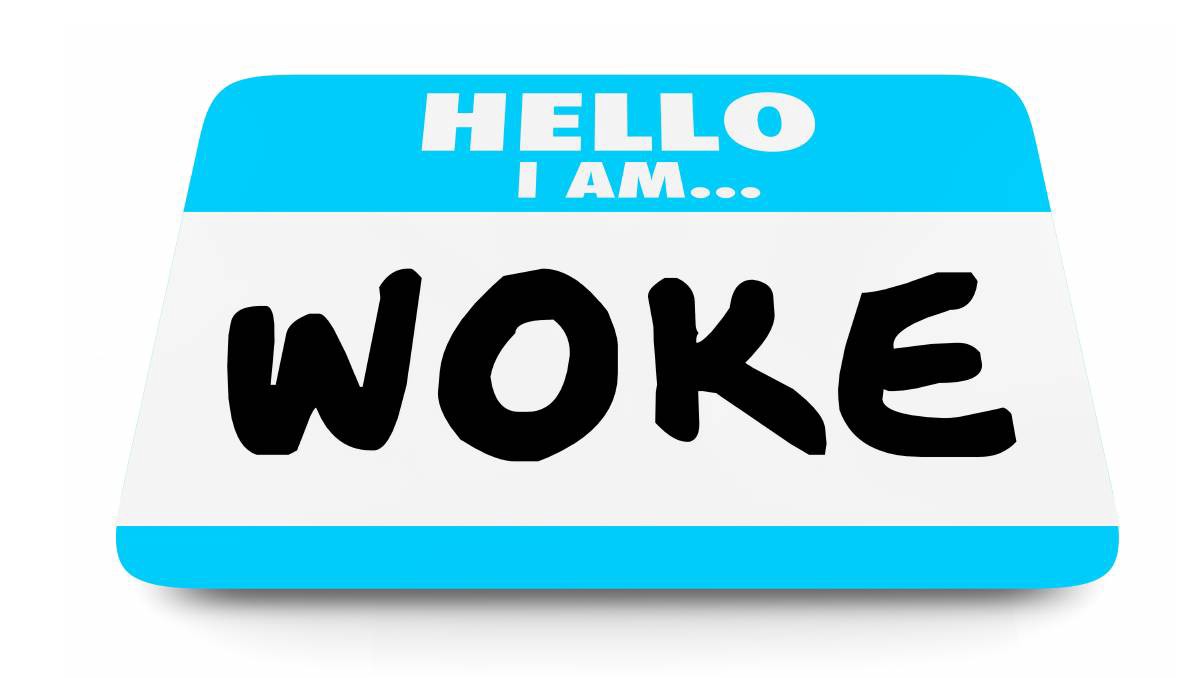
Have you woken up yet?


For those who don’t know, and many of you don’t, Fryday started four decades ago as an attempt by me to prove the pen was indeed mightier than the sword. I created the Fryday e-letter, one of the first in New Zealand, to fry a Glen Innes panel beater who demonstrably screwed me. That post is lost. Anyway, it didn’t work; he is still in business. But so, too, is Fryday, though it has mellowed and has recently taken a hiatus of a couple of years…until last week’s revival and my homage to Charlie Watts.

Thank you very much for your response to that.

My problem with Fryday is that I have no idea when I start what I am going to write. I get up at 6.00 Friday mornings, go to my computer and suffer. There is nothing.

So, this week I thought I would write about…nothing.

One definition of nothing is a lack of something.

Here in New Zealand and around the world there is a lack of common sense, augmented by a paucity of maturity. How else can we explain the deluge of wokeness that has rushed to fill the void left by the departure of those two great human traits—the remnants of which can be found only in the far reaches of the Outer Hebrides and visitors to Spike Milligan’s grave?

If I had seen that flood of wokeness coming, I would have got Donald J. Trump to ask God to send Moses back.

Examples abound, and I don’t want to give them credence by promoting them here. However, some of them are just plain silly and nonsensical. Why on earth would you not put a baby’s gender on the birthday certificate? Why would you tear down a statue of Abraham Lincoln (of all people) in Lincoln Park (of all places)? Why would you appoint newsreaders seemingly incapable of pronouncing Auckland and New Zealand? And don’t start me on the endless “issues du jour”.

None of this is, of course, new. When I worked in advertising in the 70s, an edict came out from Radio New Zealand stating that it was no longer acceptable to use the word manhole; it was to be replaced with person-hole. Thank goodness that didn’t take off, it could have injured someone.

The “issue” I have is that anybody who won’t embrace wokeness or criticises it is automatically labelled out of touch, reactionary, middle-aged or older, white, racist, and inferior. They might have a point on some of those points. I am white and at my age, if I bent a knee, I might not manage to get back up.

But look, don’t label me the way you want to label me. Don’t label me at all. You don’t know me. You only think you know me.

And don’t automatically assume that because you think you are right, I am wrong.

There is in my world, room for diversity. In yours? Apparently not. Ironic, eh?

Yes, the world was asleep before you woke us up. And good on you for doing that. But now you are taking it over the top and getting boring. So boring, in fact, that you are sending me back to sleep.

Good night.


Friday, September 21, 2018

What I want to be when I grow up


Let’s at the outset say that I am what I always intended to be as a grown-up. Whether I have indeed grown up is the only question left unanswered. I spent 30 years in advertising. And that is what I wanted to do. It was a productive time for me. It taught me many life-skills that—had time remained my friend—would have got me a job in just about every profession I could name. I compiled a list of a few. I could have become:

A teacher
In advertising, I learnt to be adept at seemingly retaining my fervour for the job whilst secretly seething with frustration. It wasn’t that the job was not personally rewarding. It was. And for a teacher able to shape young minds it must be doubly so. But in teaching as in advertising there is always an expectation for you to sell something you don’t entirely believe in—like The Treaty.

An airline pilot
Back in the 70s and 80s we in advertising flew high. We mastered the art of doing so with very little substance below us and only the rarefied air of being on top of the world to sustain us. Of course, there was always the possibility we would come crashing to the ground—as we did in the mid-80s—but we never lived for tomorrow. We lived for the day and couldn’t remember it tomorrow.

A Hamilton librarian
In Auckland advertising we were good. But those working in Wellington were better. We learnt early to handle the frustration of being second-best or being even further down the totem pole if we accept that most of the great advertising of the time emanated from the United Kingdom. So, I could handle the Hamilton humiliation of being at best second best. At least a Hamilton librarian has the facility to think of books less as a vocation than as an escape.

Leader of NZ First
Of all the jobs I am qualified for, this comes pretty close to the top. The reason is that advertising taught me one essential skill—one precept, one I share with the current leader of NZ First: “it is not what you want to say, it is what they want to hear.” I am good at that.

A televangelist
Possibly the easiest for me to master, given my advertising background. Essentially it is sales. No more, no less. Once you manage to lose that frustrating little albatross some call a conscience and replace it with the knack to selling with fervour, passion and naked belief something in which you have no belief—you are made. Advertising is second only to car sales as providing the necessary skills for televangelism.

Local body communications manager
Top of the tree for me. Requires only the essential skill (learnt in advertising and PR) of seemingly saying something when you are not. There is a skill in that. An even greater skill, requiring greater imagination, is finding a way to say nothing at all. After all, you are an expert in communications—not conveying it, just creatively avoiding it. That’s what council pays you for. Only problem is I would probably have to change my name to Dick, because that is what everybody else would call me.


-->

Friday, September 1, 2017

Political Parlance


-->
In 1975, when I was working at Colenso Advertising on the infamous Dancing Cossacks Campaign for Rob Muldoon, I was asked how I could reconcile that with having worked for Labour and Norm Kirk in the previous election. My rather glib reply was that it was just Kentucky Fried Chicken, another Colenso client I was being paid to promote. Ideological or political preferences didn’t come into it. Ten years later I was helping out David Lange—the Carl’s Burger of New Zealand politics at the time.
All those campaigns had political slogans, but despite being involved with them the only one I can remember today is Labour’s 1972 clear and explicit statement: “It’s Time (for Labour).” It was spot on. It was time: time for a change, time for fresh thinking, and time—for the first time—for many of the baby boomers to have their say in how the country was run, and by whom. It was also the time, by the way, that Kentucky Fried Chicken came up with the resonate and resilient “Finger Lickin’Good.”
However, those days are gone, and having a look at the current election and its campaigns I have to question whether so too are the days of political slogans. 
I mean, do we really need them? Do they really mean anything? Moreover, do we really believe them? To me, they are little more than patronising pap with about as much credibility and substance as the once ubiquitous but now long discredited (thank God) company mission statement.
Political slogans had their day and had their effect: “It’s Time” was great (and right for The Left), “I Like Ike” from America arguably better. But, the last effective New Zealand political slogan I can remember was Winston Peters’ Northland by-election pitch “Send a Message to Wellington.” That obviously resonated with the Northland Electorate, but having been sent, the message, like the man, is now largely redundant.
However, our political parties persist with meaningless phrases patronising every one of us.
They are not even very good. Let’s look at the current batch. National’s “Delivering for New Zealand” might as well be for a courier company; Labour’s “Let’s do it” sounds like a rallying cry for American GIs in the Vietnam war, which is somewhat ironic. Neither has substance or relevance to New Zealand politics.
The National one in particular lacks imagination and vision and makes me, at least, long for those far off days when Cossacks danced across our screens. Please don’t tell me the National Party paid somebody to come up with “Delivering for New Zealand.” 
But, the core question remains: why do we need political slogans at all? Shouldn’t, couldn’t, the political parties learn from their corporate contemporaries, KFC included, and dispense with them entirely?
I think so.
When it comes to political slogans, let’s NOT do it. 
It’s Time.

Friday, March 31, 2017

The Worst Ad Evever?

-->
Political correctness, if not dead, is at least comatose. It was fun while it lasted, and a hobby for some, but it was not sustainable against the onslaught of derision brought on by its self-perpetuating stridency and farcicality. I think its nadir came with the 1979 edict (Radio New Zealand) that the term man-hole be replaced with person-hole. There are of course other examples. But, those are in the past. These days it appears that the final and sole bastion of the PC Brigade is food. There are still those who consistently and insistently tell us what is healthy and, more often, unhealthy for us to eat and drink. Even there it is often a moving feast, if you will forgive the play on words. This week a glass of red wine is good for us; next week, likely as not, it is not. However, one of the more consistent and possibly accurate targets for the PC Brigade is soft drink. I must admit that they have come up with a substantial body of evidence that excessive drinking of soft drinks is bad for us. Certainly, they have changed my thinking and I have moved from standard Coke to Zero, though I have never drunk much of any soft drink so any improvement is negligible. Still, I think they have a point. And that is why the following ad., reproduced lately on Facebook, would be so horrifying to them. In fact, I am prepared to say that even when it was first run in the 1950s it was so out of place, so inaccurate, so stupid, it was farcical and possibly dangerous. You wouldn’t be able to run it these days; possibly it shouldn’t have been allowed to have run in those days. But, Fryday is taking itself too seriously, just like the PC Brigade. Let’s just accept that this ad will never ever run again, and sit back and have a laugh at quite possibly the most stupid ad. ever inflicted on us.


Friday, February 26, 2016

The one that doesn't feature Fryday's alter egos

I remember little of my days in advertising.
That is a blessing in many respects, but a hindrance in others. For example, some have said I should write my life story and I am technically capable of doing that. However one needs to first remember that life. And whilst anecdotes can be fun and humanising, particularly if seedy, they are insufficient for a credible biography, unless of course you are Keith Richards and an admiring readership is happy to be simply invited into your world. For me, more is needed. Facts are needed; names, places, events, etc. Not easy when few come to mind and those that do are not often aligned.
I was thinking about this this week, not because I intend to write that book, but because of two events.
The first was my correspondence with a Trade Me trader who asked if I was the same person who worked in Auckland advertising. I confirmed that I was but had to admit that I didn’t know him. We shared CVs in order to solve the mystery of where we met. There was a link, though tenuous. One of the problems was I couldn’t recall which advertising agency I was working for when I bought advertising off my correspondent. Worse he remembered me, but I didn’t remember him. How many others have I forgotten? Enough to fill a book?
The second event was the demise of Dick Smith. I was never associated with Dick Smith Limited. But I did help with the advertising of their (then) major competitor David Read Electronics. Do you remember them? They were well and truly No.2 to Dick Smith in retail electronics. However, like Avis, the fact that we were No.2 made us try harder and for a while we gave Dick Smith a run for their money (when they had some) until David Read could do no more and was eventually swallowed up—by Dick Smith, I think. However, again I cannot remember which agency I was working for, any of the personnel involved and even when it was.
So, the residue of my life in Auckland advertising from 1973 to 1995 today consists only of a possibly intriguing and frustratingly enticing series of snippets—nothing substantive. In some ways I am happy about that. I can immediately think of three:
1. I am relieved of the presumption that anybody is interested in my life in advertising.
2. There are things in that life I am glad to have forgotten and certainly don’t want resurrected now.
3. I have fun with the curious, but not entirely accurate, epigram: “if you can remember (the 60s) you weren’t there.”
I was there—in the 70s, 80s 90s. In advertising. In Auckland. Having fun. 
And if that is all I can remember, so be it.
It is enough.

Friday, March 9, 2012

Doing it by the (Face)Book

Saying I worked in advertising is something of an oxymoron. There was very little work, as I now know it, but a lot of drinking, card playing and cavorting. At the time—in the 70s—it was the expectation of that industry and the envy of others. We were the bight young things before the stockbrokers stole the mantle and then destroyed it. I see many of the people I consorted with back then on Facebook. They look considerably older, much settled and, one supposes, a little wiser. There are only two I see in person and regularly. And that is after a hiatus of near-on 40 years in the case of one. The others are probably like me in that they are content in the constraint of the Facebook contact. Facebook is like that: it brings you close but not too close, and as you and I are of an age and of an age, we have various other ways of making contact, such as an old-fashioned method called a telephone. I find it remarkable that my sons employ Facebook as a preference to even email. Is email going the way vinyl and video…obsolete? Maybe text will be next…thank God. So I do enjoy the direct engagement with true friends as distinct to the Facebook kind. In fact I am having dinner tonight with the one of those I have retained from those far-off advertising days. The one with the hiatus and a past propensity to go Greek, so to speak. It should be enjoyable, lively and, if conspicuous consumption makes it far from memorable, it will be just like those far-off advertising days, before our lives became a timeline on Facebook.


----------------
Now playing: The Band - Life Is A Carnival
via FoxyTunes

----------------
Now playing: The Band - Life Is A Carnival
via FoxyTunes

----------------
Now playing: The Band - Life Is A Carnival
via FoxyTunes

A Life in the Shadows

  I like to live in the shadows; I never like to be the centre of attention. If there’s a spotlight, I’m the one checking where the nearest ...